Vehicle comparisons
Shuttle Bus vs. Motorcoach: Short Loops or Long Miles?
Direct answer
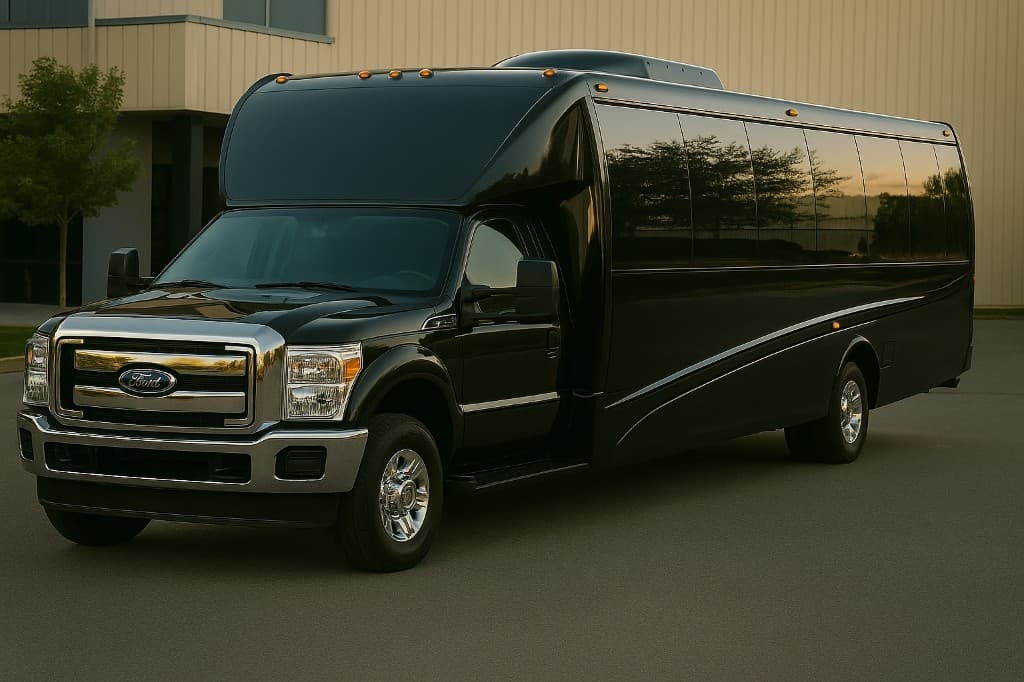
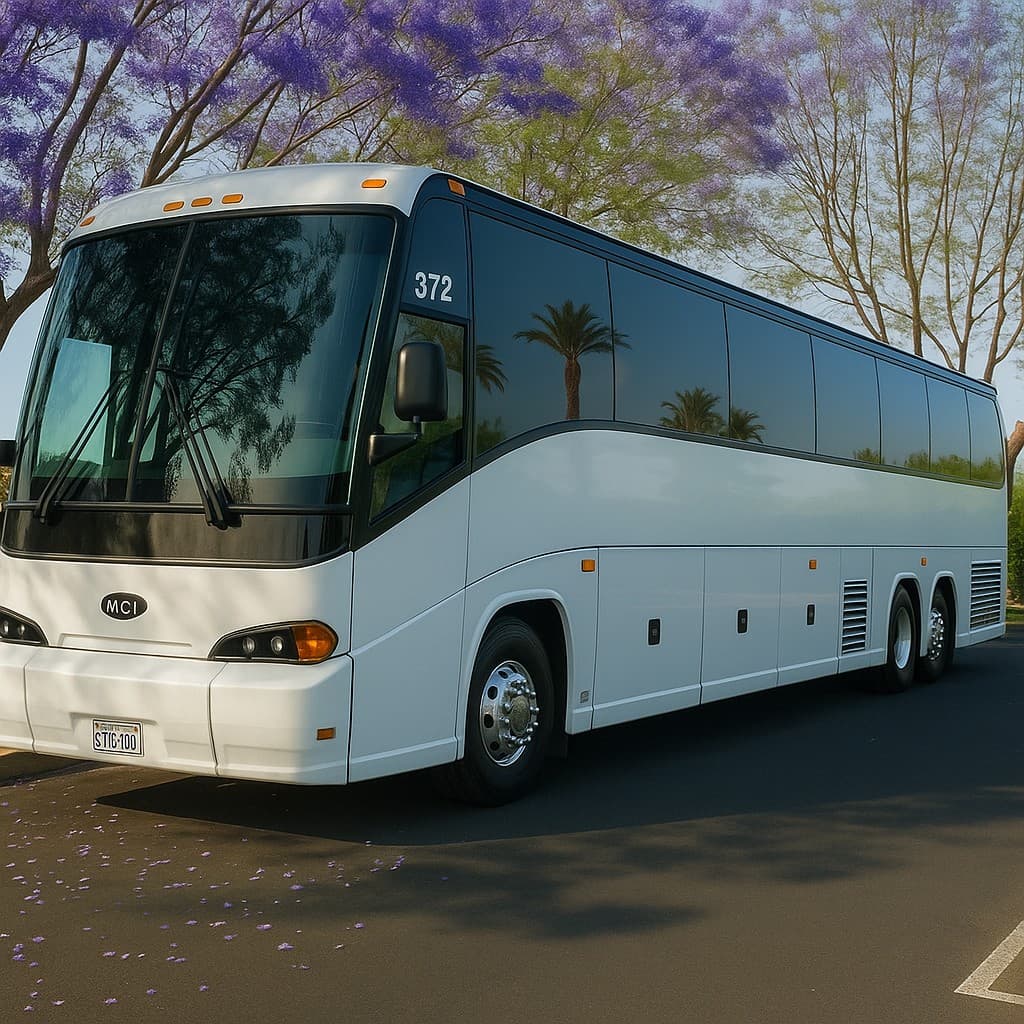
A shuttle bus, roughly 16 to 40 seats, is for short local loops, tight venue driveways, and groups that do not need a restroom or deep luggage bays. A full-size motorcoach, often 45 to 56 seats, is for long highway runs, big groups, and trips where bags, a restroom and reclining seats matter. Over-the-road coaches run on a demand-responsive basis fall under federal accessibility rules, so you can request an accessible bus with up to 48 hours' notice.
Last reviewed 2026-09-04. Find My Party Bus coordinates independent transportation providers; the signed contract controls the terms of any trip.

Both move groups well; they are engineered for different distances. A shuttle bus is usually a cutaway or mid-size body on a truck or van chassis. It turns tighter, parks easier, and is meant for city loops. A motorcoach is a full-size highway bus with luggage bays under the floor, high seating and often a restroom, built to spend hours on the interstate.
Find My Party Bus coordinates independent providers nationwide. Whether a shuttle or a coach is free on your date, and which one you get, is up to the provider. Use this guide to ask for the right class and to know what to ask about.
At a glance
| Factor | Shuttle bus | Motorcoach |
|---|---|---|
| Typical seating | Roughly 16 to 40 | Often 45 to 56 |
| Luggage | Rear or overhead storage on some models | Bays under the floor plus overhead racks |
| Restroom | Rare | Common on full-size coaches (ask) |
| Highway comfort | Fine for local trips | Reclining seats, a higher ride, a quieter cabin |
| Access to tight venues | Better: shorter and narrower | Limited; it needs a coach-friendly loading zone |
| Accessibility rules | Provider policy and ADA Title III obligations apply | ADA Title III plus 49 CFR Part 37 Subpart H for over-the-road buses |
| Best-fit trips | Hotel-to-venue loops, campus and church groups, short corporate runs | Out-of-town games, casino trips, conferences, festivals, long wedding routes |
Decision criteria
Distance and hours on the road
Under an hour each way with several loops? Shuttle. Multi-hour highway legs? Motorcoach, where the seats and the restroom start to matter a lot.
Headcount against seat count
Two mid-size shuttles can do the work of one coach on local loops and give you two schedules instead of one. For a single long haul, one coach almost always beats two shuttles.
How much luggage
Overnight trips, teams with equipment and airport groups need the under-floor bays of a motorcoach. Shuttles have little bay space, and often none.
Venue and street access
A full-size coach needs a long loading zone and a route with no low bridges or tight turns. Ask the venue where coaches park, and ask the company about access problems it already knows about.
Accessibility needs
If someone in your group uses a wheelchair or needs a lift, say so when you reserve. Demand-responsive over-the-road bus operators have to provide an accessible bus on request and may ask for up to 48 hours' notice under 49 CFR 37.189.
Steps to request the right bus
Map the trip
Total miles, hours on the road, how many loops or legs, and whether anyone stays overnight.
Count the luggage and gear
Bags per passenger, plus anything bulky like team equipment or instruments.
Check the venue loading rules
Ask each venue where a coach can stop and for how long, then pass that to the provider.
Raise accessibility early
Wheelchair lift, securement, a low floor. Asking early keeps the 48-hour notice rule from becoming your problem.
Ask what the driver hours mean for you
Long days can need rest breaks or a relief driver under federal hours-of-service rules. The provider handles compliance; ask how it shapes your schedule and your price.
Lower-end rates from quotes we sent
Quotes across our markets · June 2023 – September 2026
- Per hour, starting around
- $245–$355
- Typical night out (4 hours)
- $1,300–$1,580
| Party size | Per hour, from |
|---|---|
| 1–10 passengers | $225–$315 |
| 11–15 passengers | $240–$340 |
| 16–20 passengers | $260–$365 |
| 21–30 passengers | $280–$400 |
| 31–40 passengers | $305–$450 |
| 41–60 passengers | $300–$450 |
Your price depends on the date, the city, how many hours you need, the bus and your group size. These come from quotes we have actually sent: the low end up to the middle of the range. Busy Saturdays cost more, quiet weeknights less. Minimum hours, the drive to your pickup, tolls and gratuity all move the final number.
What we see in real requests
Taken from quote requests people sent us. These are requests, not completed trips.
About 5% of the groups who tell us a size are 31–40 people, going by our inquiry history.
All markets · June 2023 – August 2026
About 2% of the groups who tell us a size are 41–60 people, going by our inquiry history.
All markets · June 2023 – August 2026
A typical wedding request is for about 20 passengers, going by our inquiry history. Half of the groups who ask land somewhere between 14 and 28 people.
All markets · June 2023 – August 2026
Shuttle Bus vs. Motorcoach: Short Loops or Long Miles? Questions
Answers describe common provider practice. Confirm the specifics for your trip in the written quote and contract.
Do shuttle buses have restrooms?
Almost never. A restroom is a motorcoach feature, and not every coach has one either. If your group needs one, ask for a coach that has it and get that pinned to the exact vehicle you are assigned.
Can a motorcoach get into a downtown venue?
Often, as long as there is a coach-length loading zone and the approach has no low clearances or tight turns. Ask the venue for its coach instructions and hand them to the provider. If access looks shaky, two shuttles is the safer plan.
How does accessibility work on a charter coach?
Private over-the-road bus operators running demand-responsive service, which covers most charters, have to provide an accessible bus to a passenger who asks, and may require up to 48 hours' advance notice under 49 CFR 37.189. Ask when you reserve, not the week of the trip.
Is a coach more expensive than a shuttle?
Per hour, a coach usually costs more to run, but one coach can beat two shuttles on the same long trip. The number depends on the provider, the date, the miles and the hours, so get written quotes for the same itinerary and compare. What is free on a given date changes by vehicle and provider.
What about very long trips and driver limits?
Interstate passenger carriers work under federal driver hours-of-service rules, which can force rest breaks or a second driver on a long day. The provider manages that, but it shapes your timeline and your quote, so ask how they plan to staff a long itinerary.
Do the numbers in this guide apply to my city?
Use them to read a quote, not as a local price. Rates, minimum hours, deposit sizes and fee structures are set by individual companies and move with the metro, the date and local supply. The guide is here to tell you which questions to ask and which lines to compare. Then get current written totals for your own trip.
Who sets the terms — you or the bus company?
The company that covers your route. Find My Party Bus is a reservation service: it coordinates independent transportation providers and owns no vehicles and employs no drivers. Pricing, vehicle assignment, policies, cancellation terms and the contract all come from them. Before you pay anything, ask for the USDOT number, look it up on FMCSA's SAFER site, and read the cancellation terms.
Sources
- 49 CFR Part 37, Subpart H — Over-the-Road Buses (OTRBs) — Electronic Code of Federal Regulations (eCFR); reviewed 2026-09-04.Section 37.189 requires demand-responsive OTRB operators to provide an accessible bus on request and permits up to 48 hours' advance notice.
- Introduction to the Americans with Disabilities Act — ADA.gov (U.S. Department of Justice); reviewed 2026-09-04.Lists privately operated transit such as intercity and charter buses, hotel shuttles, and airport shuttles among businesses open to the public covered by ADA Title III.
- Safety Information for Travelers and Trip Planners — Federal Motor Carrier Safety Administration (FMCSA); reviewed 2026-09-04.FMCSA consumer guidance for chartering a bus, including its passenger-carrier search and safety-complaint hotline.
This guide is general information, not legal advice. Transportation providers are responsible for their own regulatory compliance; state and local rules vary.
Request availability for your trip
Share the date, pickup city, stops, hours, and headcount. A reservation agent will check with independent providers and return a written quote. A quote is not a reservation; under the current reservation terms a 50% deposit is typical once a provider confirms, and the signed contract controls.