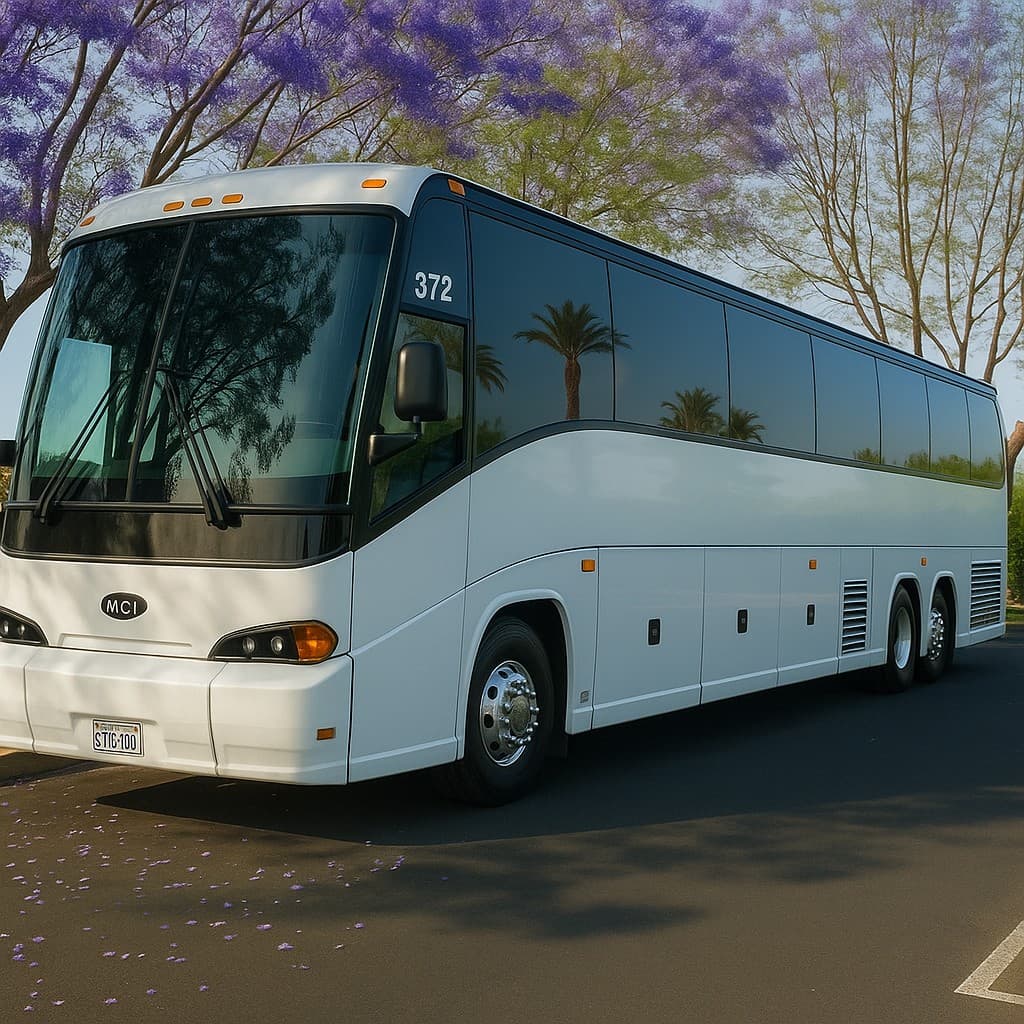
 Example rendering
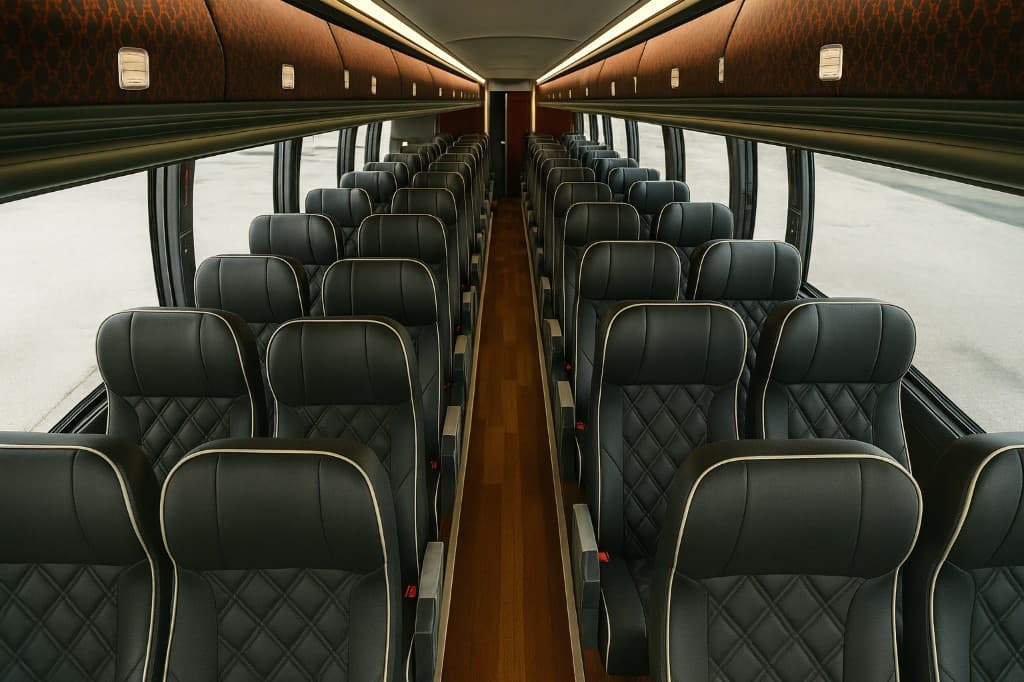
Pictures show the size and style, not the exact bus you will get. Ask for photos of the actual vehicle before you pay.
Coach / executive van · Very large groups
56 Passenger Coach Bus
- About 56 passengers (example)
- 41 or more passengers
- Minimums vary by provider
- Seats
- About 56
- From
- $300/hr
- Most trips
- 4 hours
Quick answer
A 56-passenger coach is a full-size motorcoach in its maximum-capacity layout. It moves the most people per vehicle and has the least legroom in the coach range. Good for short and medium transfers with a big group; for long drives, price out two smaller coaches. Count your group honestly and ask whether every seat will really be used.
Reviewed 2026-09-04
Worth asking about this size
- The seat pitch in inches
- Whether there is a restroom
- How many bags the under-floor bays hold
- Outlets, Wi-Fi, screens, and a PA system
- A wheelchair lift, and how much notice it takes
- The overall length, for venue and loading zone access
Check pricing for a 56 passenger coach bus
Where you're going, the date, how long and how many. You get a real price back.
About this coach / executive van example
Fifty-six seats is the top of the standard motorcoach range here. The layout squeezes in every row the shell allows, which is efficient for moving a crowd and less pleasant per rider than the configurations in the forties. Restroom and under-floor bays come standard. Images on this page are representative renderings, not photos of a vehicle assigned to any booking. If your group is well under fifty-six, ask whether a lower-count coach is available. If it is over fifty-six, the answer is two coaches, not standing riders.
Capacity guidance
Fifty-six adults in forward seats at the tightest legroom of any coach layout. Standing is not an option: the seat count is the ceiling, and federal bus rules restrict standees to buses built for them with a marked standee line. A group of sixty needs two coaches. The under-floor bays hold roughly a bag per rider, with the aisle kept clear as federal rules require. On a transfer under an hour, the tight legroom barely registers. On a long drive, a group under forty-four is much better off in a lower-count layout, and a group over fifty-six in two coaches. Fifty-six plus a driver is fifty-seven, over the federal CDL threshold.
Compare with nearby sizes
Adjacent sizes and styles groups usually weigh against this example.
| Attribute | Type | Example capacity | Group size band | When to consider it |
|---|---|---|---|---|
| 56 Passenger Coach Bus | Coach / executive van | About 56 seated | Very large groups | This example |
| 54 Passenger Coach Bus | Coach / executive van | About 54 seated | Very large groups | Two spare seats, for a guide or just for comfort. |
| 50 Passenger Coach Bus | Coach / executive van | About 50 seated | Very large groups | A convention-standard size with a little more legroom. |
| 28 Passenger Coach Bus | Coach / executive van | About 28 seated | Large groups | Two of these replace one full coach when a venue cannot take a motorcoach. |
| Shuttle vs coach guide | — | — | — | When one maximum-capacity coach beats two smaller vehicles, and when it does not. |
56 Passenger Coach Bus compared with nearby vehicle examples
Type
- 56 Passenger Coach Bus
- Coach / executive van
- 54 Passenger Coach Bus
- Coach / executive van
- 50 Passenger Coach Bus
- Coach / executive van
- 28 Passenger Coach Bus
- Coach / executive van
Example capacity
- 56 Passenger Coach Bus
- About 56 seated
- 54 Passenger Coach Bus
- About 54 seated
- 50 Passenger Coach Bus
- About 50 seated
- 28 Passenger Coach Bus
- About 28 seated
Group size band
- 56 Passenger Coach Bus
- Very large groups
- 54 Passenger Coach Bus
- Very large groups
- 50 Passenger Coach Bus
- Very large groups
- 28 Passenger Coach Bus
- Large groups
When to consider it
- 56 Passenger Coach Bus
- This example
- 54 Passenger Coach Bus
- Two spare seats, for a guide or just for comfort.
- 50 Passenger Coach Bus
- A convention-standard size with a little more legroom.
- 28 Passenger Coach Bus
- Two of these replace one full coach when a venue cannot take a motorcoach.
- Shuttle vs coach guide
- When one maximum-capacity coach beats two smaller vehicles, and when it does not.
Capacities are example figures for a vehicle class. Legal seated capacity is confirmed per assigned vehicle by the provider.
What a 56-passenger bus costs
Quotes across our markets · June 2023 – September 2026
- Per hour, starting around
- $300–$450
| Party size | Per hour, from |
|---|---|
| 1–10 passengers | $225–$315 |
| 11–15 passengers | $240–$340 |
| 16–20 passengers | $260–$365 |
| 21–30 passengers | $280–$400 |
| 31–40 passengers | $305–$450 |
| 41–60 passengersthis size | $300–$450 |
Your price depends on the date, the city, how many hours you need, the bus and your group size. These come from quotes we have actually sent: the low end up to the middle of the range. Busy Saturdays cost more, quiet weeknights less. Minimum hours, the drive to your pickup, tolls and gratuity all move the final number.
What we see in real requests
Taken from quote requests people sent us. These are requests, not completed trips.
About 2% of the groups who tell us a size are 41–60 people, going by our inquiry history.
All markets · June 2023 – August 2026
61% of every request we get is for a Saturday, and another 20% for a Friday. That is why Saturday availability is the first thing to ask about.
All markets · June 2023 – August 2026
Requests peak in April, July, and August, when prom, graduation, and wedding season all land at once. Spring dates are the ones that go first.
All markets · June 2023 – August 2026
Five minutes that saves the night
Full booking checklist- Pay the company named on the contract, nobody else.
- Ask for photos of the actual bus and its legal seat count.
- Get one total with hours, travel, tolls, tax and gratuity listed out.
- Read the cancellation and bad-weather terms before you put money down.
Where we checked our facts
We checked the facts on this page against these public sources on the dates shown. Schedules and rules change, so double-check anything close to your date.
- 49 CFR 393.90 (FMCSA): buses built to allow standees must mark a standee line; no person may occupy the space forward of the rear of the driver's seat(opens in a new tab)reviewed 2026-09-04
- 49 CFR 392.62 (FMCSA): a bus may not be driven unless standees are behind the standee line and baggage is stowed so every exit stays unobstructed(opens in a new tab)reviewed 2026-09-04
- 49 CFR 383.5 (FMCSA): CDL vehicle groups; Group C includes vehicles designed to transport 16 or more passengers including the driver; Group B covers vehicles with a GVWR of 26,001 pounds or more(opens in a new tab)reviewed 2026-09-04
56 Passenger Coach Bus questions, answered
What people ask before booking this size.
Can a 56-passenger coach take sixty people if a few stand?
No. Fifty-six is the seated ceiling, and federal bus rules limit standees to buses designed for them with a marked standee line, which motorcoaches are not. A provider can refuse to leave with more riders than seats. Sixty riders means two coaches.
Is a 56-passenger coach a good choice for a four-hour drive?
It is the least comfortable coach layout for a long drive, because the rows are packed in. If your group is fifty or fewer, a 50- or 44-seat layout of the same shell gives real legroom. Over fifty, two coaches with fewer seats each ride better. For transfers under an hour, fifty-six is perfectly fine.
How much luggage fits under a 56-passenger coach?
About a checked bag per rider with very little spare, and nothing rides in the aisle. If your group has more luggage than that, the answer is a luggage vehicle or a lower-count coach with slack in the bays. Give the provider a bag count.
Does a 56 passenger coach bus really fit 56 people?
56 is the rated seat count, which isn't the same as 56 people riding comfortably. Perimeter and bench seating measure capacity differently from forward-facing rows, and formalwear, coolers, gift bags and luggage all eat into seat width. Groups at or near the rated number usually find 54 is the comfortable figure for a long evening. Ask for the legal seated capacity and the interior layout of the exact vehicle before you commit.
Can people stand up while a coach / executive van is moving?
Ask the operator, and never count standing room as extra seats. Seat-belt and standee rules depend on how the vehicle is classified, how it's registered, and which jurisdictions your route crosses. Get the operator's written policy on passengers standing or moving around while the vehicle is in motion, and size your booking on seated capacity alone.
What should we get in writing before booking a 56 passenger coach bus?
The specific vehicle for your date, its legal seated capacity, the interior layout, and which listed features are actually on board. Sound system, lighting, climate control and any bar or cooler space come with the vehicle, not with the class. Also get the billable hours and minimum, what overtime costs, the deposit and cancellation terms, and what happens if this vehicle isn't available. The images on this page are representative renderings of the class, not photos of the vehicle you'll be assigned.
How often do groups ask for this size?
About 2% of the groups who tell us a size are 41–60 people, going by our inquiry history. That's aggregate inquiry data — people asking for quotes, not trips that happened — so read it as what other planners are shopping for, not as a guide to what's available or what it costs on your date.
Not quite right? Try these sizes
A size up or down often changes the price more than anything else.
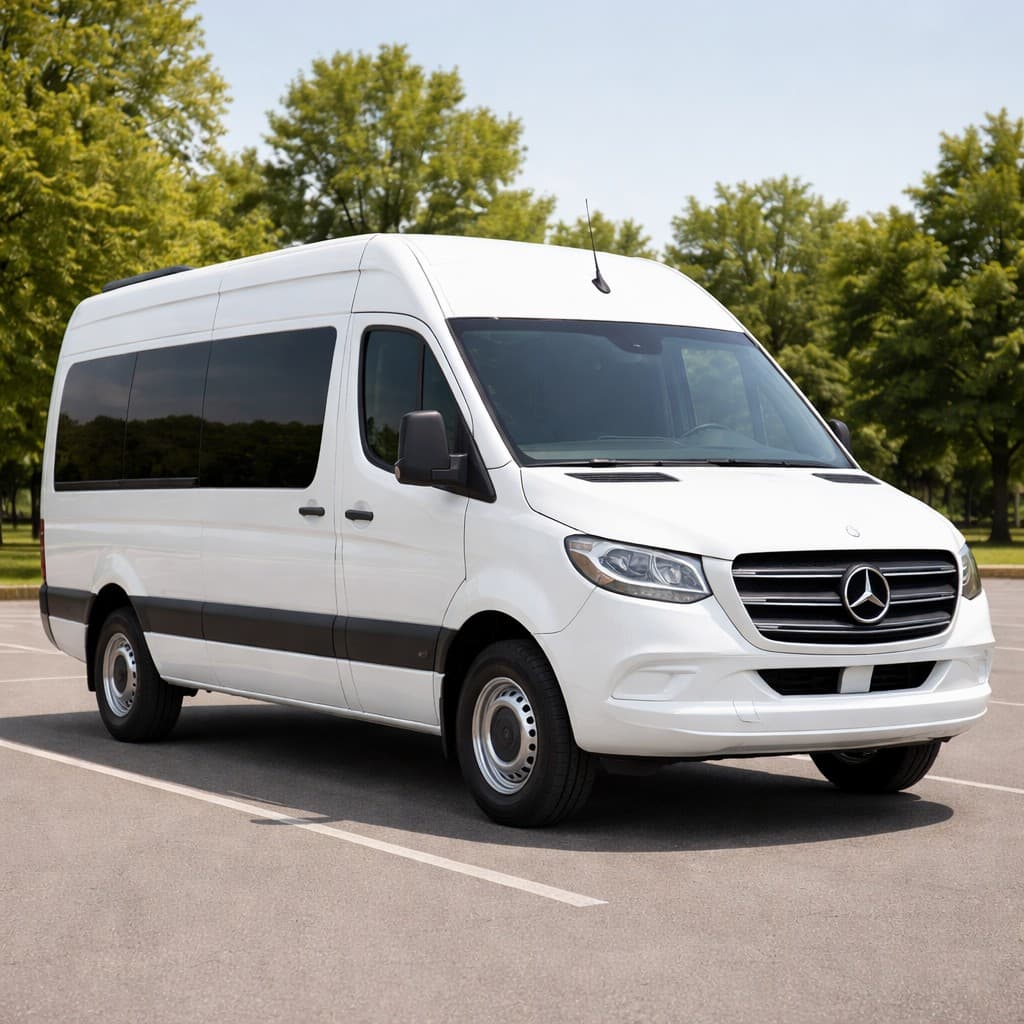 Example rendering
Small groups
Up to 14 passengers
Limousines, sprinter-style vans, and compact buses.
Example: 12 Passenger Limo Sprinter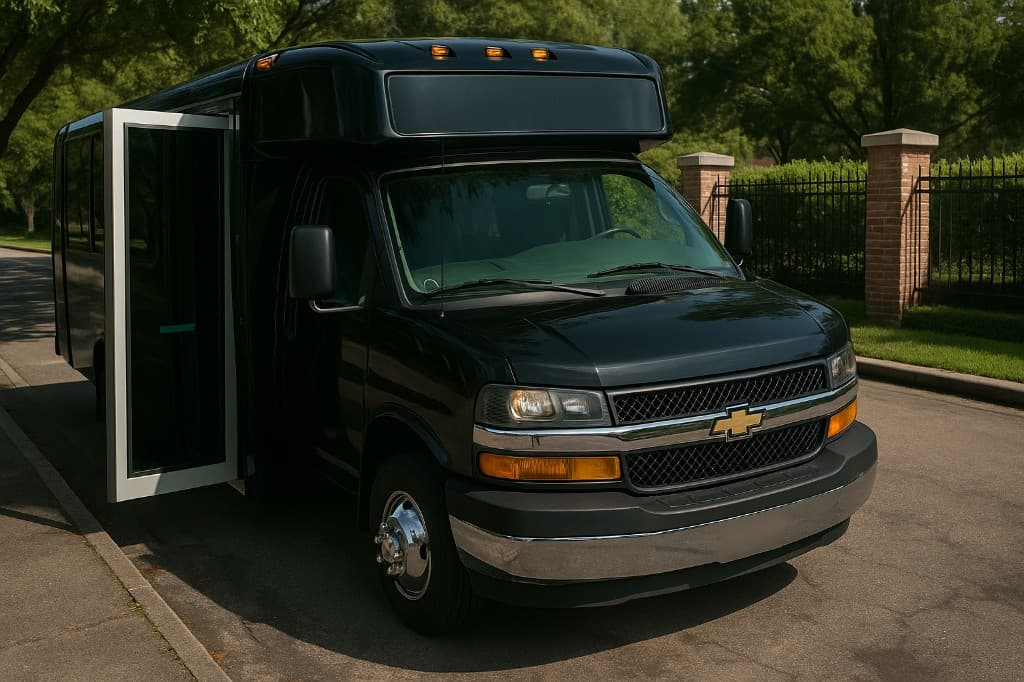 Example rendering
Mid-size groups
15 to 24 passengers
Smaller party buses and limo buses.
Example: 20 Passenger Party Bus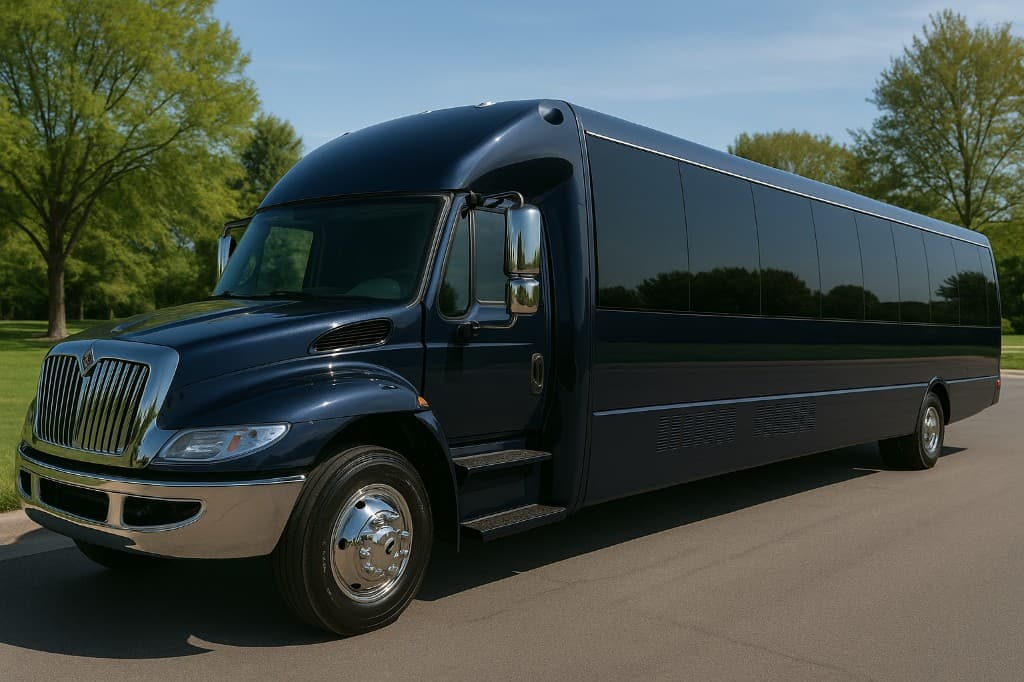 Example rendering
Large groups
25 to 40 passengers
Full-size party buses.
Example: 34 Passenger Party Bus
Pictures show the size and style, not the exact bus you will get. Ask for photos of the actual vehicle before you pay.
Browse all vehicle examplesEvent guides that often involve this vehicle class
Planning steps, timing, and questions to ask for each occasion.


Handy while you plan
Free calculators, planners, and guides to make your party bus booking a breeze.
Vehicle Fit Question Builder
Build a vehicle-fit verification list.
Multi-Vehicle Split Planner
Compare one large vehicle vs several smaller ones.
Seating Arrangement Optimizer
Sketch a seating plan before the trip.
Cost Split Calculator
Divide a real quote per person.
Loading polls...
Get a price for a very large groups bus
Tell us the date and headcount. We price the size that fits and check a company covers your route before anyone asks for money.
No obligation. Written quotes from a reservation agent. Availability varies by date, vehicle, and provider.